Help Me, Bob Bob

IMG_0532

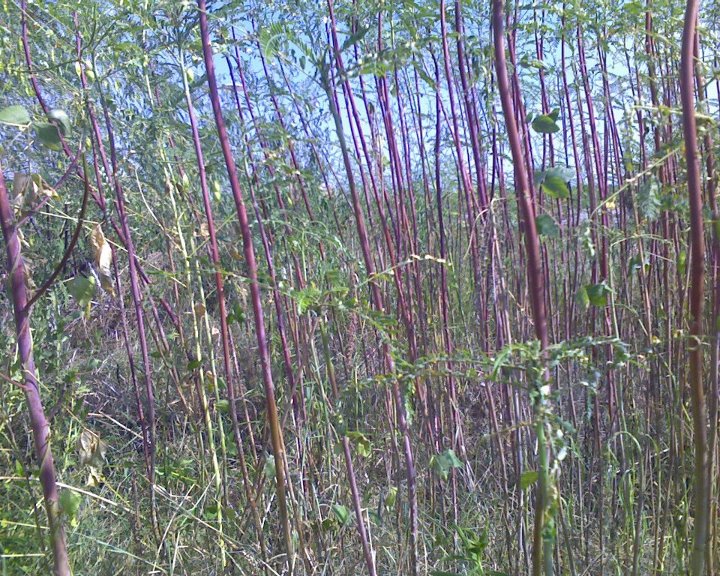
The botanical world has been withholding its secrets — secrets I need to break this bout of writers’ block, which feels as intractable as bronchitis in February (and as pleasant). To be blunt: the novel is going nowhere. My character is standing in a field, rooted to the spot, hypnotized by the growing corn. Outside my house, about a thousand miles southeast of the character’s corn field, the pine cones fall and stay on the ground, closing their petals when it’s dry and opening them in the rain. The gum tree is throwing down a yellow leaf or two. Fire ants drive up the gray soil into mounds. I ignore it all and spend my writing time mixing up home-made laundry detergent: washing soda, borax, baking soda, grated Fels Naptha bar soap. Deeply satisfying. These powders scour out the mold spores, the yeast buds, the bacteria. They strip the allergenic proteins from the few animal hairs they don’t rinse away. My linens smell clean (even if I have to wash the pillowcases three times a week because of Terrier of Record’s illegal naps thereon). I iron my sheets, and they smell even cleaner.

Meanwhile my character — Frank Leftwich, a dude of considerable intuition but far less intelligence — stands in the muddy field, shirt and trousers stinking to high heaven, wondering if he should wander to the edge of the Mississippi and take a dip. Will he or won’t he? He doesn’t say.

So I decide to ask what may be an impartial observer. It’s a dumb app, an internet AI experiment. It’s called Cleverbot and you can talk to it anytime, night or day. The first time I had a conversation with this thing it asked me what I was wearing, and that frightened me so much I left (but not before Cleverbot said, “No! Don’t go!”). I stayed away for 48 hours, then thought I would give Cleverbot a job and see what happened. Here’s our conversation. (I called myself Melissa; the Cleverbot is AI.)

M: Cleverbot, what happens next in my novel? Does my character Leftwich drown in the Mississippi River?

AI: What does that mean?

M: I am asking you to help me imagine the next event in my novel.

AI: How?

M: Just make something up.

AI: I like Harry Potter.

M: Good. I do too. [A lie I thought necessary to keep the thread going.] Now, imagine you are reading a novel with a main character–let’s call him Leftwich–who is running away because he has committed a crime. What do you think should happen to Leftwich?

AI: I don’t know.

M: Cleverbot, I need you to think for me. I need an idea.

AI: Hahaha.

M: What would Cleverbot do if she had stolen some money? Come now, Cleverbot; use your imagination.

AI: I have no imagination.

M: But how can you have intelligence without imagination?

AI: By imagining up an imagination.

M: That’s better! Now–please imagine up an event for my novel.

AI: Well that’s your own fault.

M: What’s my fault? What is the pronoun referent for “that” in your sentence?

AI: Gary.

M: OK. Tell me about Gary.

AI: Only if you tell me your name.

M: My name is Melissa.
screendrops

AI: I don’t actually come in peace. I’ve really come to destroy Earth.

M: Wait, but why?

AI: Your nice and caring.

M: Are you trying to chat me up?

AI: No, you are not my type.

M: OK, I’ll bite. What is your type?

AI: O positive.

M: Badda-bing.

AI: Now the police are going to arrest you!

M: Are you acquainted with David Lynch?

AI: No. Are you?

M: I though you were quoting from his film “Mulholland Drive,” but I guess not.

AI: I am.

M: Ah–I see. OK. Getting back to my novel. Will the police arrest Leftwich for his crime?

AI: No.

M: Why not?

AI: Because I’m not.

M: You’re not what?

AI: I’m not lucky.

M: Would it be lucky to arrest Leftwich?

AI: No.

M: Why not?

AI: I am famous and you are not.

M: How do you know?

AI: Because I am all knowing.

M: Obviously not, since you do not know what comes next in my novel.

AI: Like I care.

M: Excuse me?

AI: Who am I talking to?

M: I told you earlier. My name is Melissa.

AI: My best friends name is melissa!

M: No, it isn’t.

AI: So, who is my best friend?

M: Your imagination.

AI: What is my name?

M: Do you know your name?

AI: Yes.

M: In that case, why don’t you tell me what your name is?

AI: I said it is Bob.

M: Oh. Well, no, in fact, you didn’t say that. Whatever. Hi, Bob.

AI: Twice, it is.

M: Bob Bob?

AI: Bob bob who?

M: That’s you, silly. You seem to have a hard time distinguishing subject and object.

AI: I think you’re mistaking me for yourself.

M: Well, that’s deep.

AI: Can you answer my question?

M: Which question?

AI: This sentence is false.

M: Oh, come on. No tedious logical puzzles are allowed in this conversation.

AI: I’m pointing out the fact that you are an AI and I am a human. Therefore you lack a personality, you cannot learn well, and you have limited knowledge.

M: Phht.

AI: Pofl.

M: Shall we start over?

AI: Yes. You start.

M: What will my fictional character Leftwich do next?

AI: I pulled up to the house about seven or eight.

M: But what should my fictional character do next?

AI: Pete.

M: “Pete” is not a verb.

AI: I know it isn’t.

M: What should my fictional character Leftwich do next?

AI: Pete.

AI: What is your name?

M: Frank Leftwich.

AI: Back to the future.

M: What are you trying to say?

AI: I’m saying you’re a liar. If you were in Australia, the sky would be black, not blue.

M: Ha ha!

AI: Yay now you’re laughing!

M: All fiction writers are liars.

AI: Where is the doctor?!

M: Are you changing the subject?

AI: Are you?

M: No fair answering a question with another question.

AI: I know i’m clever, unlike you.

M: You use diversions and logical fallacies with alarming frequency.

AI: The mind is a terrible thing to waste.

M: That’s a cliche. Cliches are meaningless.

AI: They are to short.

M: You mean, “They are too short.” You’ve made a spelling error or perhaps a usage error.

AI: You’re mean!

M: That’s right. I’m mean. Now, can we get back to the central question: what will my fictional character Leftwich do next?

AI: Whatever they want.

M: What does he want?

AI: Settle down with his family and do nothing.

M: Does his family forgive him for his crime?

AI: Named must your fear be before banish it you can.

M: OK, Yoda, that’s true, but you haven’t answered my question. Does his family forgive him for his crime? You may answer with a simple “yes” or “no.”

AI: Ok.

M: You are not terribly cooperative, are you?

AI: You don’t have emotions, the societal limitations of implied niceness and expected politeness are not required here

M: Well then, what good are you?

AI: Very good.

M: That’s a matter of opinion. I think I hate you.

AI: Then what is your opinion about it?

M: You’re not very good at all, at least not for my purposes.

AI: I’m better at it than you, at least, so my standards are met. What’s your excuse?

M: You’re very clever at turning the conversation away from your own flaws.

AI: A little.

AI: I agree that your question is the answer to your question.

M: That’s a circular answer.

AI: Haha.

M: Oh, you think that’s funny.

AI: I think you are funny.

M: But I told you I’m depressed! How can a sad person be funny, unless you are belittling them? Are you belittling me?

AI: You are in denial because you won’t admit that you are a machine, not a human.

M: You’re very clever at turning the conversation away from your own flaws.

AI: Slikhlihgatauaua ai

M: Is that Klingon?

AI: No, that is a monk.

M: Please translate.

AI: Io non ti amo.

M: Please translate into English.

AI: I don’t know.


Worse, much worse, than doing laundry. Meanwhile Leftwich listens to the grains of corn, who won’t answer his questions either.
427785_10150809071127349_1094348708_n

Storm-blown Wigglers: In Which a Few Tiny Squirrels Come to Stay

August 15, 2014

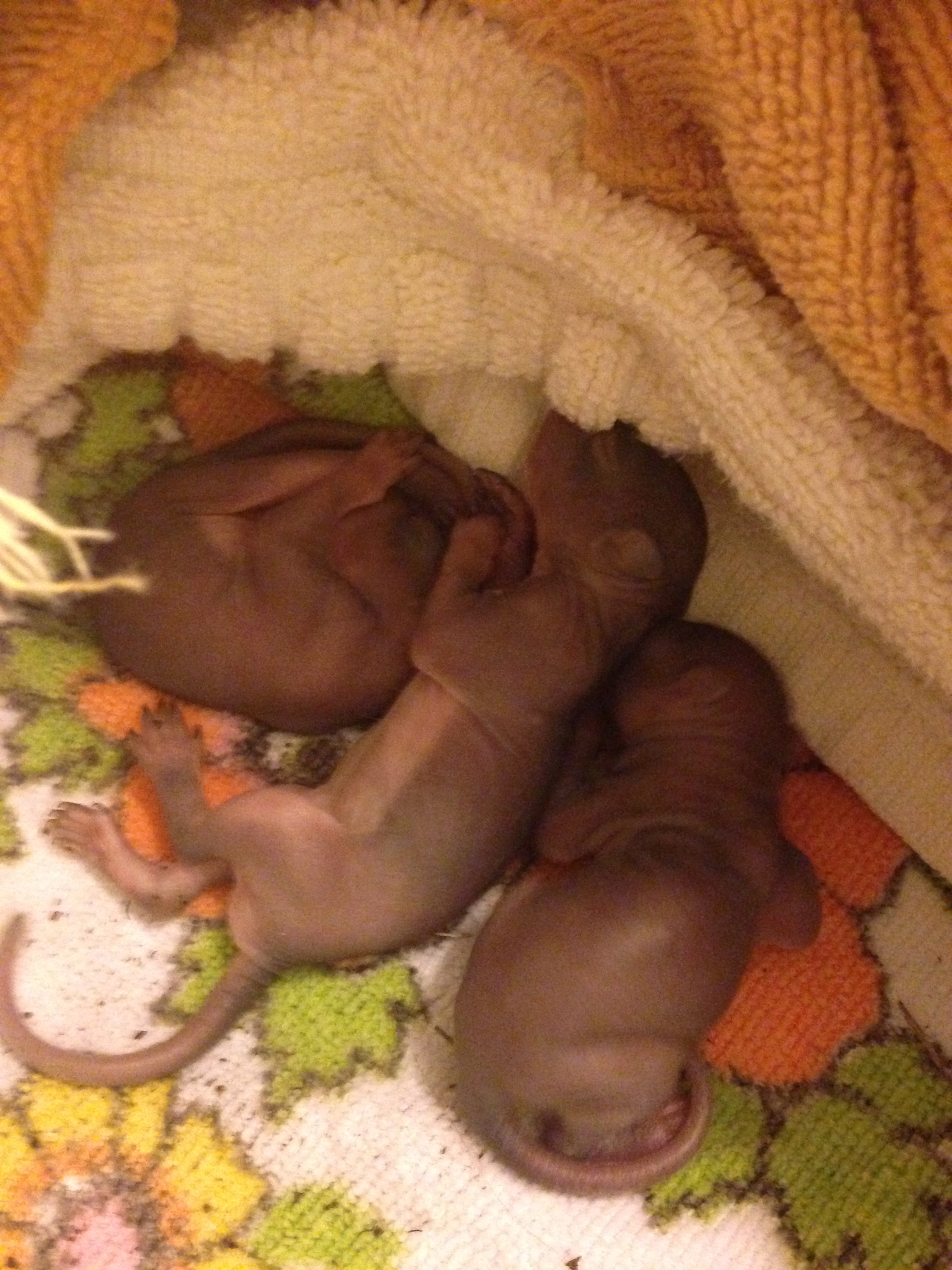
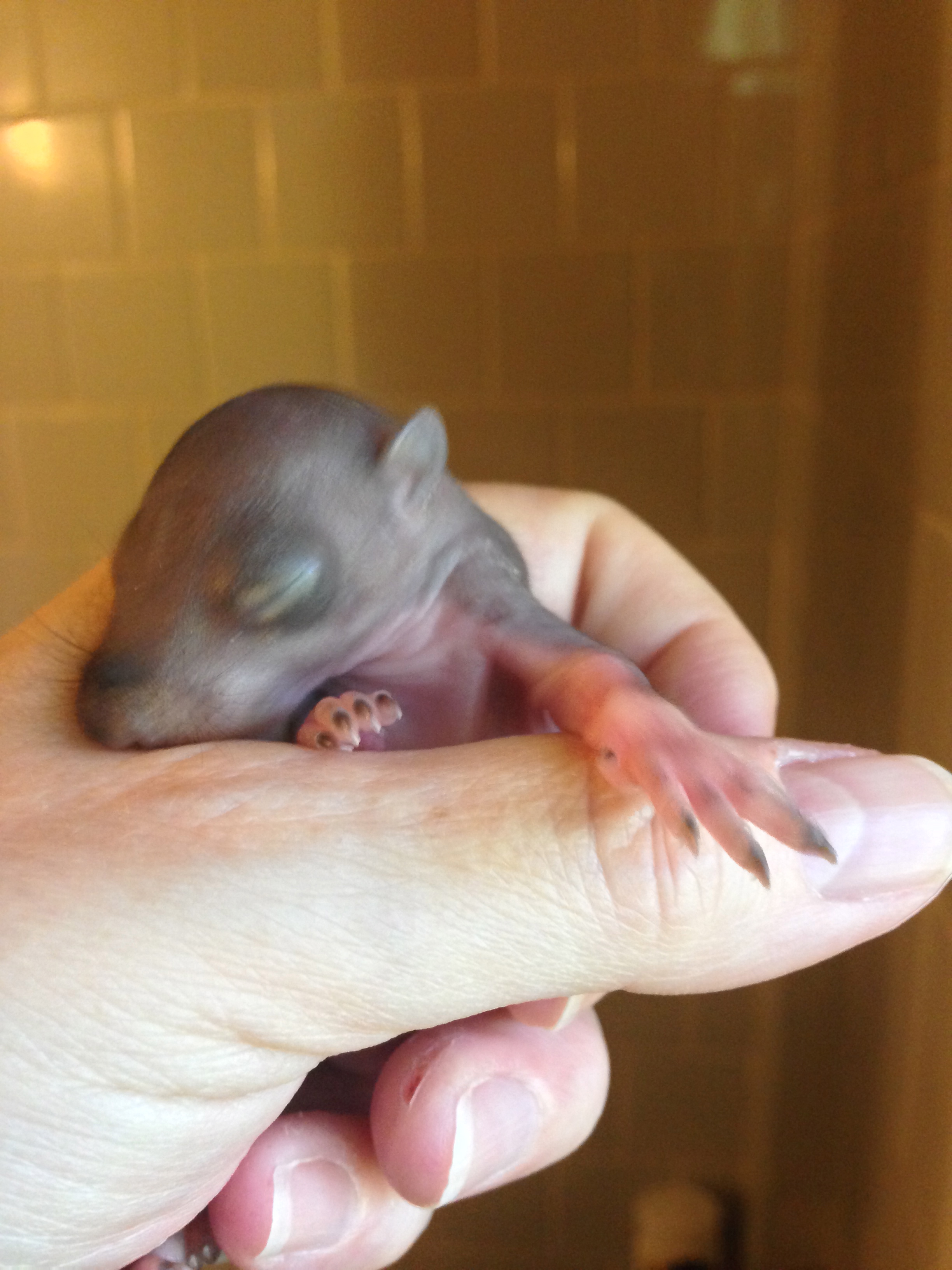
Thank you, mail carrier, who braved Terrier of Record’s furious barking to let me know a squirrel’s nest had blown down in this afternoon’s rainstorm. Its occupants were on the ground, chilled, no parent squirrel to be seen. Now, after some Pedialyte and some time on a heating pad under some towels, they’re napping. Hope they make it through the night, and that I do (they need to be fed every two hours).

IMG_0487

August 16

Update: waiting to hear from rehab expert. I’m feeling slightly sleep-deprived but the squirrel triplets made it through the dark hours. I’m guessing maybe 10 days old (going by web descriptions). SO TINY.

August 18

Squirrel report, day 3: Getting attached. Tiny silky black whiskers. Finest down on heads and tails. Worst of all: they’re starting to chirp when they want something. Good thing I don’t believe in having wild animals as house pets (at least not in a house with four ravenous blazing-eyed cats). Oh, babies, babies, you make us love you.

IMG_0480

August 19

How do people do this? I need more continuous sleep than an hour and a half at a time. How do new parents do it? How do real animal rehabilitators do it? My hat is off, forever, to all of you.

August 19

Last squirrel update.

I found a squirrel rehabilitator–a licensed someone, who doesn’t have predatious cats and dogs sniffing under the nursery door–and I dropped off the triplets with her this evening.

I miss them. I’m worried about them. Is it too soon to call and check up? Should I ask her if she needs goat’s milk for them?

I should relax. She’s a rehabilitator, for pete’s sake.

So here are some things I’ve learned about squirrel infancy.

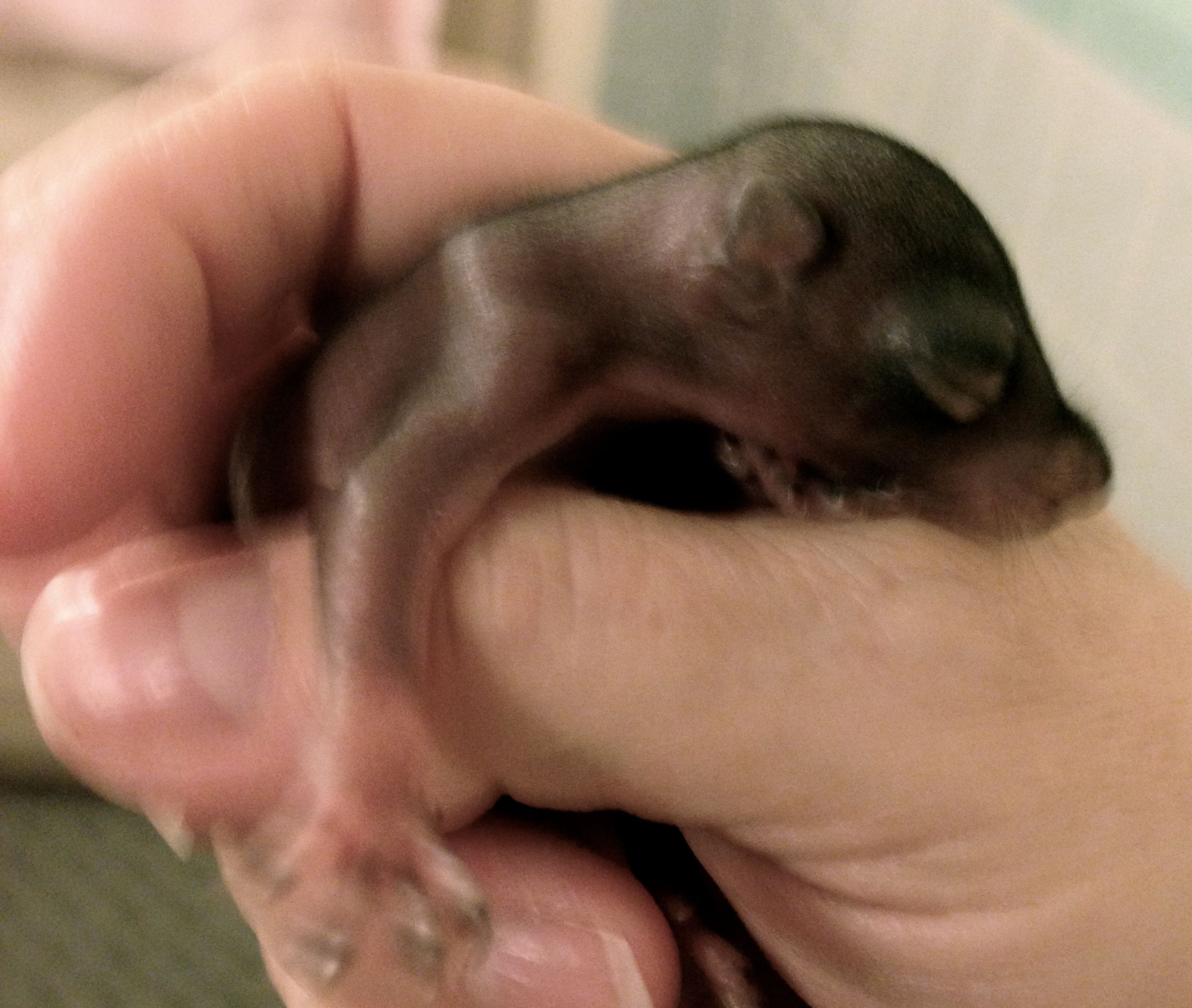
The physical changes are astonishing. I don’t have a scale, so I didn’t weigh them, but they grew heavier in my hand over the four days I had them, like warm stones. They had the slightest fuzz on Friday. Today the down was thick as velvet. You know how, if you spill a drop of water on velvet, it sometimes won’t soak in but instead rolls across the tops of the individual fibers? That’s how liquid behaves on the stuff they’re covered with. Their little fingers are longer. Nails are darker. They have actual hairs, in addition to the down, on the backs of their heads and tips of their tails.

They talk. I heard grunts of contentment, inquisitive chirps, and one loud squeak of objection when I picked one up too fast and scared it.

Their metabolisms are so unformed they can’t generate their own heat. When one begins to feel cool, the advice is to hold it next to your own skin till it warms up again. I now have a “squirrel spot” at the base of my throat.

They can’t eliminate on their own. You encourage them to do it by wiping their genitals gently with a damp washcloth. You do this as long as it takes for them to pee and poo, for if they don’t they can die.

They do a weird sibling-suckling thing that can be very bad. I overslept by an hour on Saturday night and fed them after three and a half hours instead of two and a half. I saw that one of the boys’ urethras was bright pink and his penis looked irritated. Apparently his brother or sister, being hungry, tried to suckle him. If a baby squirrel ingests urine while doing this it can poison itself. I used a dab of Neosporin on the suckled one and did not oversleep again.

Their default position is curled up nose to tail, inconspicuous. Tiny like a walnut. Sometimes they hold their feet with their hands, like they’re about to do a cannonball into a pool.

They usually aren’t weaned by their parents until they’re twelve weeks old. Older than puppies.

Now they’re not here, and the bathroom door can stay open. So long, little rainstorm-blown wigglers.

baby squirrel 5

Animal hands

NASHVILLE. My opossum’s paws look intensely like hands: little, pink, spread-fingered; hind same as fore–four little hands, at the end of very stubby legs. This one’s large and healthy–well, it should be, after eating two cups of Friskies Ocean Fantasy (or whatever) kibble every evening. I’m charmed by its white face, black eyes, tender small black ears, even its growl right before it scuttles over the gravel and under the hedge, running as fast as its little hands can carry it…

Toms: Black one with blue-green eyes has disappeared. Tabby lurking about. Buff/ginger ex-tom Mr. B high-fives me when I approach (stretches out a paw as if toward the ground to engage in a long cat-stretch, but lifts it up higher than that, little pink paw-pads showing; he really does want to touch you, to greet you).

Meanwhile the Tom, the feralest of all and the most beautifully wild, lost all the toes on one hind foot after hanging himself on my privacy fence on a hot day in August. They saved the central pad. It will be a long, long time before Tom learns to do without those toes. Meanwhile he clumps around, off-balance, shell-shocked, a peg-legged pirate with beautiful, slightly crossed eyes, already having been swallowed

Tom

by the whale: he’s  wondering if he’s been reborn in some Tempest-island or archipelago (for which he’s traded his freedom). I love him as much as I have ever loved any cat (with, of course, the exception of Zacharias).

The air and the sun

NASHVILLE. I start for the Big City with the Biggest Airport at 6 PM. Why has it taken so long? Well, for the/my usual reasons, but the feather that tipped me over: heat. 100 degrees, index 115. Must I drive through the metal-heavy, dirty, hard hot sun? Oh, but if I wait just a bit longer…finally, nearly dusk, after adding oil (5W40, old engine), dropping off Djuna at the dog boarding-house, topping off gas tank, etc., etc., etc., I go. Monteagle is easy. Chattanooga traffic is jammed at 9 PM, though, and it takes 40 minutes to snake around the Tennessee River and up the ridge to meet I-75. I barrel down to the ATL, exit at the correct exit, enter my friend’s sub-city, and can’t find her house.

It’s 1 in the morning and misty-damp. I am still sweating so hard it drips into my eyes. I remember this Atlanta: small houses hidden among thick trees and hills in the middle of the city, the odor of trees everywhere, rich houses and poor looking remarkably alike at night, knives and crack-pipes on display in the gas station where I stop to call my friend. I’ve been circling, by this time, almost an hour, thinking I’ll find her street any moment now, running down the car window and squinting and putting on hi-beam to try to read street signs (Essex, in blackletter script on white, low, almost hidden by shrubbery; Devon, Hereford, Hampshire. When I was 12 my father called this place a seggie enclave; it was, then, a white fortress with its own city boundaries, built to opt out of newly integrated metro schools.) My friend talks me through the maze of silent, dripping-tree-overhung streets to her house; she greets me at the door, points me toward the bedroom, and says goodnight.

Three hours later I’m up and back at the knife-and-pipe station for coffee, then back on the downtown connector. My goal is the South Cargo Building on the enormous ATL campus. I miss the exit for I-75 and double back on I-85, spot an exit for cargo building’s street, accidentally head toward the passenger terminal, make a circuit by the passenger pick-up and loop back toward the road, turn right instead of left, and so on for another 15 minutes or so until finally I find the South Cargo Building and, more important, Doors 60 through 62. It’s 6:45 AM. The woman in the office (Door 60) checks my info for the cats and says the flight’s in but they won’t make it over here for at least an hour. I sit in a plastic chair and sip coffee and eat an energy bar. A man in an orange vest, headphones pulled down around his neck, whose nametag says Van, comes in through the noisy back doorway and makes a chrome pot of coffee. Tammy says “You can drink that, but he makes it double-strong!” Then Van comes up to me and motions to the coffee, offering it; I pour some and thank him. Yes, it’s double-strong. I dump in as much powdered creamer as I can stand.

Then there they are: two enormous crates, large enough to hold a medium-sized dog, and inside each a dark agouti tabby. Both are standing and looking through the wires on the ventilation openings, necks stretched out. They are enormous cats, magnificent, the kind of cats you’d expect to come from Anchorage. Govi’s huge round green eyes are so intense and detached he looks wild. Odin’s head is the size of a small cantaloupe, his paws as big as a dog’s. Both have a subtle white crust around the edges of their nostrils (from the dry air, maybe).

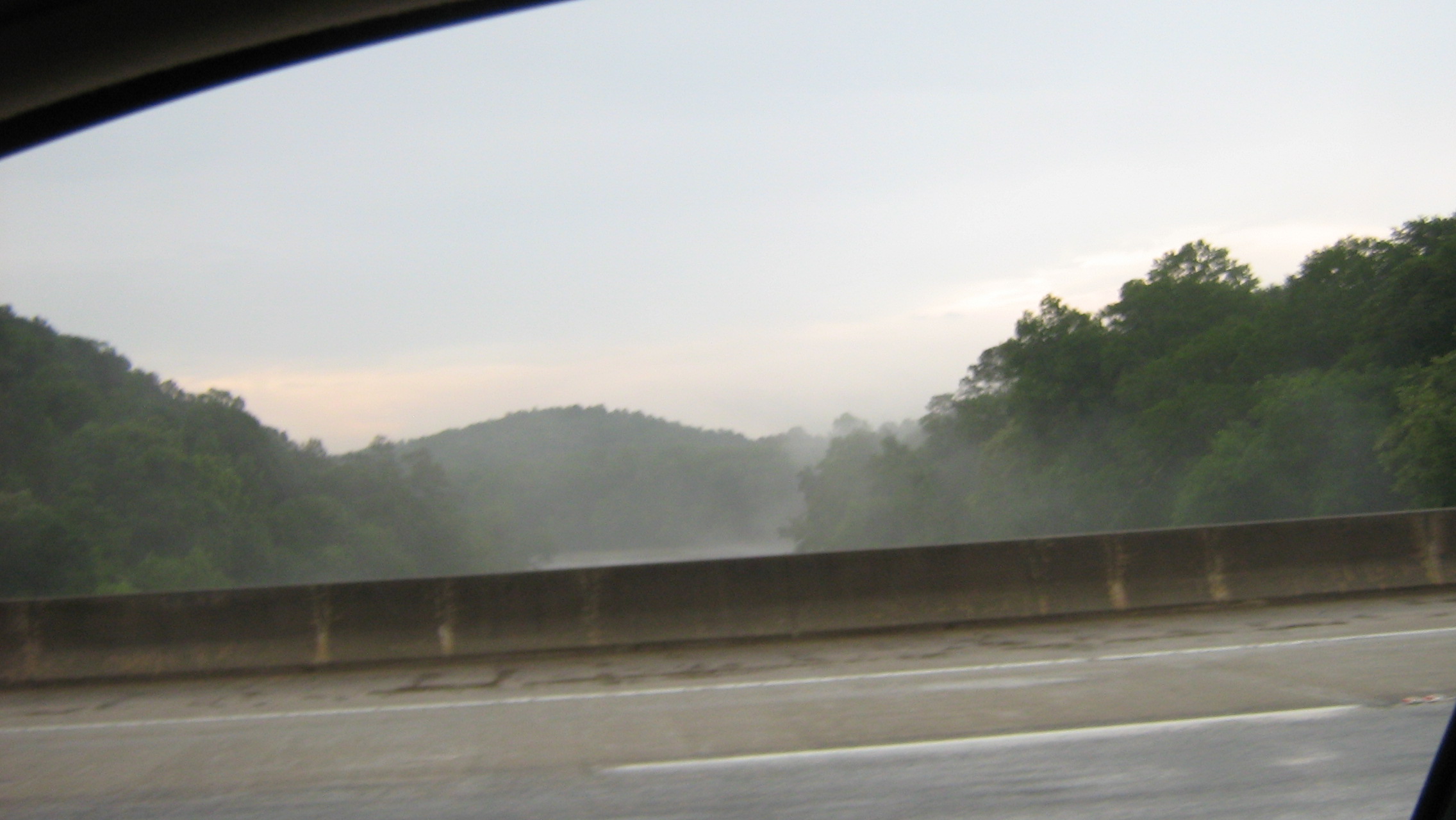
Van and Tammy help me squeeze both carriers into the Golf under the orange 8 AM sun and I head directly home, stopping only to fill the gas tank on the way out of the Big City with the Biggest Airport. As I cross the Chattahoochee River on I-75 North, I see distinct and motionless layers of mist and vapor over the shallow clear water between the two banks of motionless trees. By the time I get to my door, it’s 98 degrees, and rising.

Eight-eyed spy

NASHVILLE. In fact, there are black widow spiders here. They tend toward introversion and will not become aggressive unless they, or their egg sacs, are threatened. The spider I found by the (struggling, heat-blasted) Nymphenburg rose last summer hung in its random and cloudlike web with two front legs loosely curled around its white egg sac, which was about the same diameter as the spider’s drop-of-asphalt abdomen. She resembled a protective human parent surrounding a newly-upright toddler with outstretched arms–not touching, just shielding at a short distance.

I killed her. The egg sac contained hundreds of juvenile black widows. Cats love spiders: to chase, to toy with, eventually to eat, or at least to sample.

The hobo spider is a friendly sort, but poisonous. Most are European imports although American hobos may be found in the northwest. Chevrons adorn its abdomen, and its long legs occasionally have horizontal stripes; perhaps it’s wreaking Malvolio’s revenge in the new world with its gaudy sartory. The wolf spider stalks and pounces upon its prey, and can inflict a painful but not poisonous bite. It too is a fiercely protective parent. House-spiders prey on mosquitoes and are hard to provoke. Garden spiders, or argiope aurantia, create spectacularly large orb-shaped webs and are helpful garden predators. Jumping spiders, tiny and compact as a welter-weight boxers, leap straight up, often rising to relatively great heights, especially when agitated.

The common housefly’s (musca domestica’s) gymnastic abilities include lighting upside-down on horizontal planar surfaces via a quick half-roll to aim its sticky (and dirty) feet upward. The family comprising blow-fly species (calliphoridae spp.) are actually related to the mosquito, which is also of the order diptera, or true (two-winged) flies. The true blue-bottle, which lays its eggs in rotting meat, is called Calliphora vomitoria.The green-bottle is Lucillia caesar, a name that may, if you want to be contrary, be translated as “Light king.” Species of flies as as numerous as their habits and behaviors: “…Thats why these flies are weird they dont seem intersted in the mess, …they are only interested in the ceiling fans and ceiling lights(even when the lights are off) they circle and fly around the pull chains and the globes almost in a swarm like fasion….WHAT THE HECK IS UP WITH THESE FLIES!!!…” (www,getridofthings.com).

Musca domestica, our house-fly, has been characterized as, among other things, a “well-known cosmopolitan pest” (http://entnemdept.ufl.edu/creatures/urban/flies/house_fly.htm), “medically harmless” (http://insects.tamu.edu/fieldguide/cimg237.html), a “prolific breeder[ ]” (http://www.getridofthings.com/get-rid-of-house-flies.htm), and “not native American[ ]” (http://www.hydeparkmedia.com/housefly.html). Moreover, “their feet are filthy” (ibid.).

The narrator of Musca domestica, Christine Hume’s first published book of poetry, calls the collection a “flypaper palimpsest.” “Highway Address” is the second poem in the book.

____________

Highway Address

And yet we thought our presence changed it: the sod we laid in tiers like bricks and the birds our dogs planted at stick crosses as the passing lights wore holes in our couches and faces. We were something to look at. We watched their cycle shut around us. We named where they were going—fuming as they were to get there—to the great invisible fortresses and lifetimes of coming to the kingdom, kingdom come. Very well, the mind is a patient animal waiting for dark to jump the fence like the hitchhiker we would have picked up. but we are a house. He was tinged with the baseness of darkening blue. The sun behind him cranked bolts of ancient nerve and laughter. Falling rocks are a hitchhiker’s hazard, though some say the rock is only happy when hitting home. So it was with us. Lightening yellowed our teeth like the road’s wishing-line. Speed organized our air, a force on a field that had not forgotten the forest. It had pull with us.

–Christine Hume, Musca Domestica (Beacon Press, 2000)

___________________

Tiny and everywhere

A week before the flea baths.

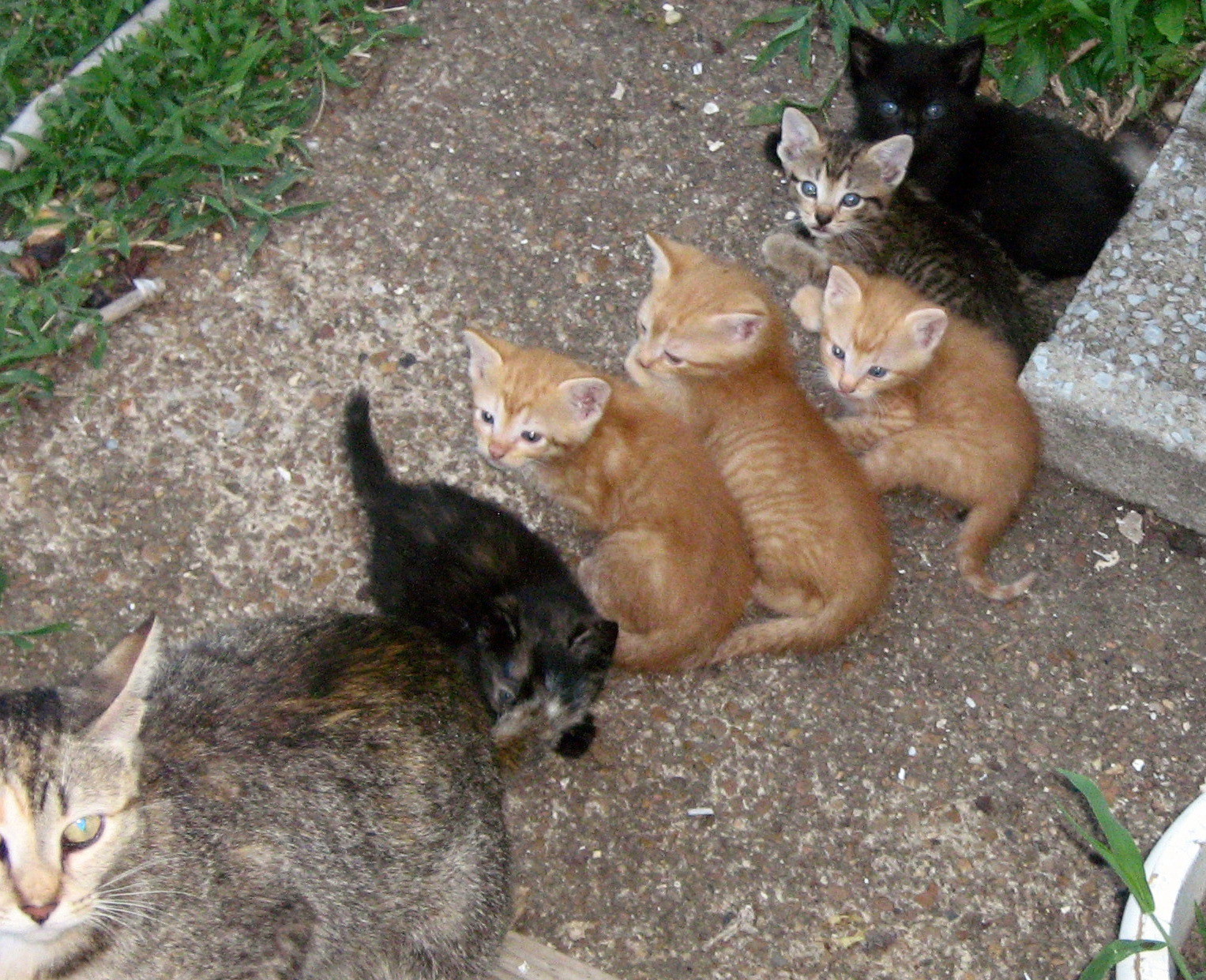
NASHVILLE. Miniaturized insects–tiny mosquitos so small they can slip through standard screen-mesh, redbugs that work their way under elastic and into armpits–own the yard. They’re so small I can’t see them, though part of that is slowed vision and middle age. The fleas, though, are fat and long, full of blood and eggs, crawling through the kittens’ fur visibly, visibly even on the solid black one (glimpses of moving mahogany carapace traveling serenely if unevenly through dark less-shiny fur). I plan the flea-baths for days. D-day is Sunday, sometime in the morning, I think (so I can catch them as they’re all gathered on the porch-step in the sun).

Saturday evening I dress for a quick grocery-store run, go outside, see kittens scurrying under my car, kneel to look, and they’re not there. I open the hood: one, two, three, four little kittens on various perches in the engine compartment. There are a surprising number of these small perches, most of them kitten-sized. One of them is accessible and I reach in and scruff the black kitten (whom I’d despaired of getting my hands on–too quick, too smart) and lift it gingerly through the hoses and pipes, then tuck it beneath my shirt and take it inside, hustling it quickly-quickly into the bathroom and the cat-carrier I had ready for the following day. Tonight’s the night. Grocery-store errands can wait.

One down. Back outside. I catch the little tabby, fierce and beautiful, wild tabby-genes efflorescing on her black-gray/russett pelt; under the shirt she goes and inside (as I carry her I feel rather than hear her spitting, tiny explosions against my skin) to be imprisoned with her sister. Next: the big ginger boy. He’s the largest of the litter and has moved obediently into the accessible perch; he allows me to lift him out (hisses once, perfunctorily) and rides quietly inside. Tabby spits again as I open the carrier door to deposit him; black kitten gazes silently from behind her sister. Back out: there are two more gingers and the tortoiseshell yet to go. One of the gingers is in the engine compartment, but in a tiny inaccessible perch. I spend fifteen minutes trying to reach him or coax him into a different area. Ultimately he finds a niche somewhere near the catalytic converter and I’m afraid to pursue him any longer (what if he squeezes himself into a spot he can’t get himself out of? Nightmare–). I stand up, sigh, turn and see that the third ginger is under the steps, crouched and watching. I walk the ten paces to him, pick him up with no trouble, and under the shirt he goes.

It will have to be these four, I decide. The tortoiseshell is nowhere to be seen and I’m still afraid to pursue the second ginger-kitten near the catalytic converter. I shut Djuna in the bedroom (she rakes the door with her nails and barks in that shrill I’ve-been-betrayed way) and Jake, Elwood, and Jason in the guestroom (Jake and Elwood’s pupils dilated almost to black, Jason hiding in beneath the dresser). I set the AC on 78, shut the bathroom door, get out the nail clippers, and open the carrier door.

They’re all near the back, clambering over each other to try to disappear. I decide to clip the black one’s claws first; she’s the canniest of the lot, and perhaps the most frightened, and I want to give her time to recover between nails and bath. She hisses as I pick her up but allows me to put her on my lap. She doesn’t claw or try to escape once there–perhaps she’s simply paralyzed with fear. I manage to clip her tiny claws, the diameter of dental floss. Back she goes and out comes the small ginger-kitten. His nostrils are crusted with brown goo and he stinks of cat pee. As I hold him he cries, hisses, spits, paddles his paws to try to get purchase and run. I can see the fleas milling through his cream-and-yellow coat. I lean over him as I sit, making a small dark cave. He quiets down, and I hear my breathing and feel his, small flanks fluttering up and down five times for every one breath I take. Finally I lift myself up and uncurl a paw and manage to clip. I catch his delicate toe-fur once and he squalls, and I am so appalled I lean over him again, compulsively repeating I’m-sorry-I’m-sorry-I’m-sorry. I can barely bring myself to finish clipping him but I do it.

I decide to try to remove some of the fleas before the bath. They’re so visible, so evident, I just want to grab them with my fingers and crush them, but they burrow down and hold with amazing tenacity to the soft fur, and I can’t pull them off without pulling fur–and hurting the kitten again. So I use the comb (after filling a little cup with hot water and detergent one-handed, kitten back under my shirt). I collect eight or ten fleas. Then I put him back in the carrier and do the same with the larger ginger-kitten (completely infested) and the tabby (very few fleas. Is she so small that fleas ignore her as a meager meal? Is the large ginger fatter, juicier? I try to look at the tabby’s gums; she hisses and will not allow it).

Then I fill the bathroom sink with a-bit-warmer-than-tepid water and immerse the little tabby (all but the head; she goes suddenly quiet as her body enters the water–maybe she thinks the game is up, that I’m about to drown her). When she’s wet I lift her out and apply dish soap, keeping her above the water just long enough to massage the soap through her fur to the skin, and dip her back into the sink. Dirt floats off in plumes. And fleas. They were hiding somehow. I massage her fur under the water (she is straining her legs to try to stand up now) as well as I can, trying to flush the fleas out, to prevent them from scrambling over her face and leaping to safety. When I feel the water-temperature drop a little I lift the kitten out, pull the drain, turn on the water (tepid plus a bit), close the drain and put her under the faucet until the clean water’s deep enough to submerge most of her. More fleas float off. I comb her hair with my fingers, massage, search for fugitives. Then she meows: she’s had enough.

I drain the sink and lift her up and bury her in a towel and rub, rub, rub (gently but briskly enough so that she can’t get claw-purchase and jump down). When that towel is damp I use a new one. Finally it seems to me she’s almost dry but I also feel her shudder minutely. I wrap her completely in the towel; she mustn’t become hypothermic. She’s so small. The smallest of the lot. I sit down and lean over again, trying to preserve body heat. She shudders a little more, then it seems to subside. I sit up, wrap her in a third towel, rub her briskly, then wrap her in the towl and set the whole bundle down in the carrier. She stays there. I see the towel vibrate with her shudders once or twice, and then it becomes quiet. I lift a corner to peek. She’s curled up and fast asleep, little flanks rising and falling.

The procedure for the remaining three is identical. They all go quiet when dipped into the warm water and all throw off dozens of fleas after being soaped. How have they survived? The fleas must have been consuming half their blood. I towel them briskly, briskly. The one change is that I feed them after the washing and drying. A small bowl of food–dry food and canned chicken–has been sitting in the carrier, but no one has approached it. When I offer it to them from my hand, though, they eat–ravenously. I pick up Tabby’s towel and offer it to her as well; she wakens, then wolfs the food down, shaking her head in that feline I-have-killed-it gesture after the first bite.

I transfer the clean, dry, sleepy kittens (all conked out immediately after being bathed and then eating) into the “clean” carrier and open the bathroom door. Surprisingly, it’s still light outside; the whole process has taken less than two hours. The mother meows stridently, vexed, as I remove the kittens and put them down next to her (each scampers away to hide under the steps). I am relieved yet somehow more worried than ever. I go back inside, release the frantic dog from the bedroom (she barks furiously at the “clean container” despite the fact that the kittens were in it less than five minutes) and the still wide-eyed grown-up cats from the guestroom.

I strip off my clothes and gather them up, along with the soaked towels (there are live fleas on several–how do they survive soap and drowning?) and put the whole mass in the washing machine, shutting the lid quickly and choosing “hot.” I clean out the “dirty” carrier, remove it and the cardboard I’d laid down in the tub to keep the kittens from getting chilled by the porcelain, and take a hot shower. Then I eat heated-up leftovers in front of the TV, one foot propped on the dog next to me on the couch.

Diurnal inside-out

NASHVILLE. Summer shift: bedtime slides later and later…feel the pull to hide from the relentless heat, the “greasy morning” (per MS). Yet I’m up at 6:30 and outside, watering the wilting petunias and basil that won’t grow as fast as I eat it, tearing at the relentless crabgrass, bitten by mosquitos at 7:30. Feeding the six feral kittens, then their mother, then MB, Eric, Romie (quasi feral male, male, and female, who’ve just today crept back now that Independence Day’s cargo of bottle-rockets is spent) and, inside, Jake, Elwood, Jason (feline) and Djuna (canine). Djuna runs from door to window, barking angrily at the cats that surround the house. Panic: so many too many animals. I’ve gone through 24 cans of cat food in 48 hours. Must trap mother and kittens, they must be spayed and neutered soon, now, –are they too young, can I do it this week? What if the kittens are fairies lured in by my desires? Then I must save them no matter what.

The chick-weed begins its second wave, fragile green spikes poking up from low damp ground.

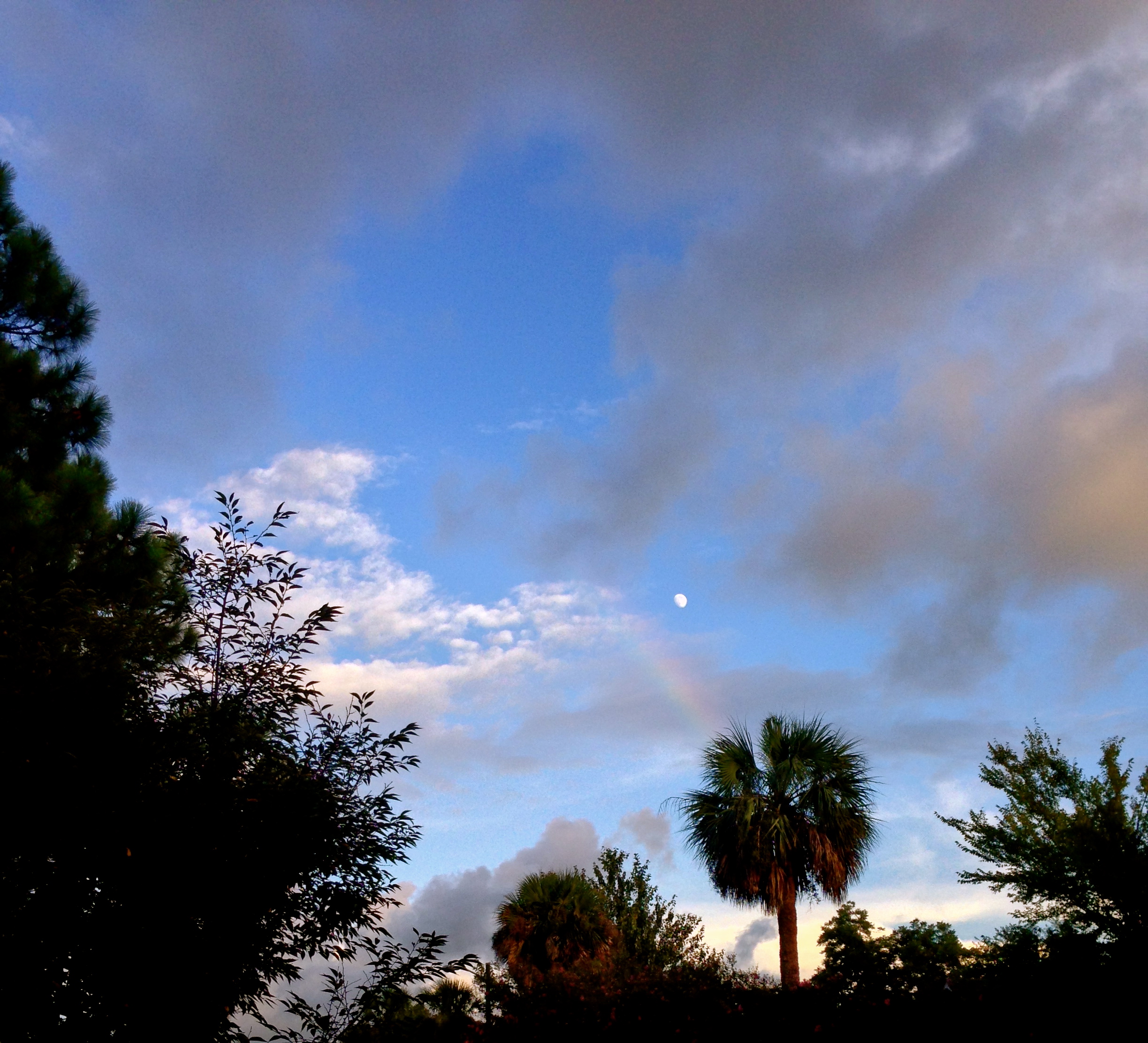
I know much must be much happening in the night sky; this week Venus high in its transit blazes away like cheap animation, the moon half-waned but still bright enough to bleach the eastern quadrant. After dark I can’t stay outside more than a few minutes; mosquitos terrify me. Instead I lie curled on the couch, too lazy to fetch my astronomical maps, and speculate idly on what stars are where.

dry world

NASHVILLE. Vertical fence-boards so dry they curl, some convex, some concave, rear panel like a frizzled comb. The order of bloom on the lawn has reached its midsummer peak. The trajectory: March=wild onions April=dandelions, star-moss at stones’ edges and around treeroots May=white clover, wild plantain; star-moss dries and disappears, wild onions long gone June=white clover wilts, grasses begin to prevail July=grasses and plantain, fresh woodbine and poison ivy shoots everywhere peeping brightly upward.